Interior design
Admin
January 12, 2026
57 views
Interior Door Materials: Types, Features, and How to Choose the Right One
1. Solid Wood Doors
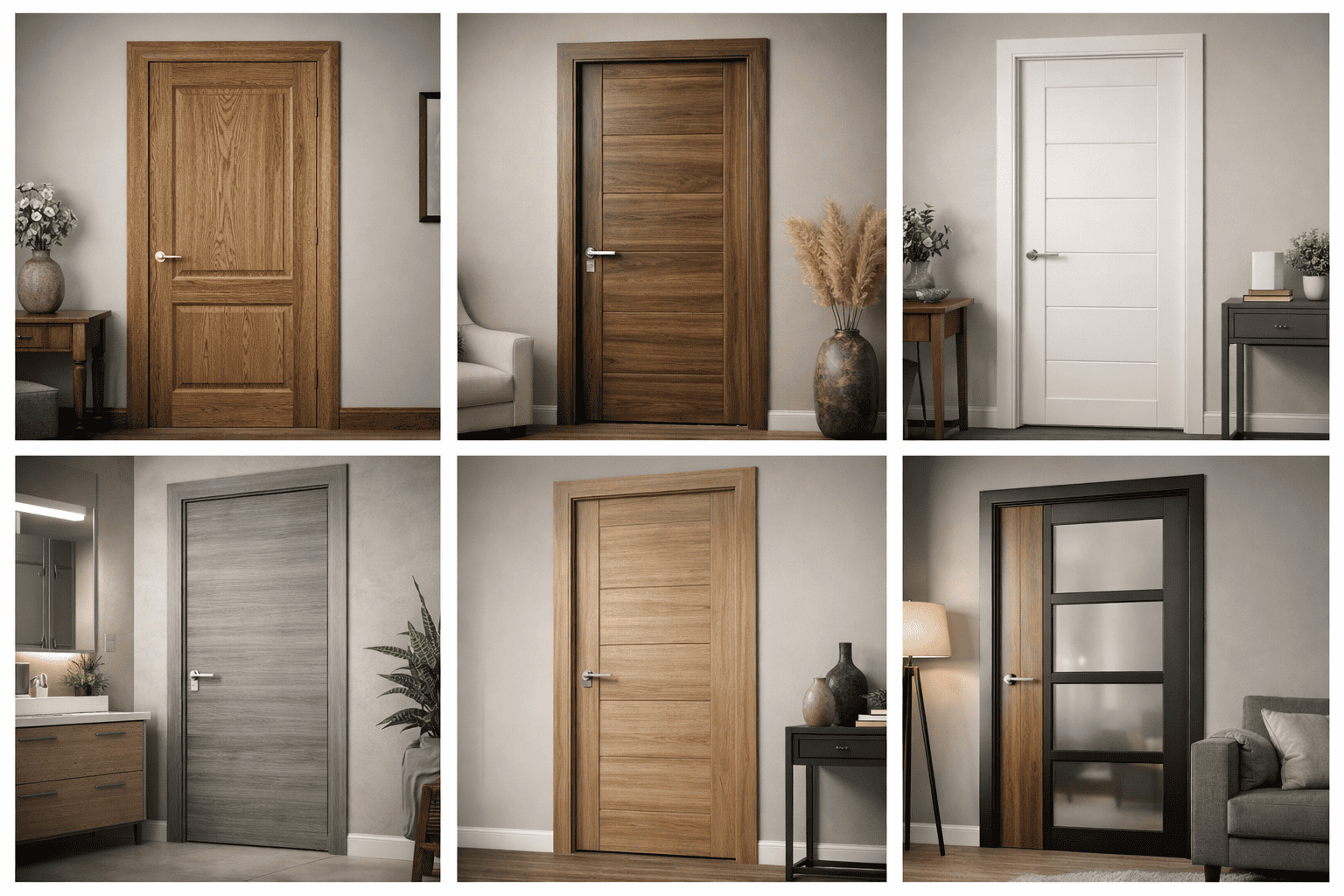
Solid wood doors are made entirely from natural timber such as oak, pine, ash, or beech.
Advantages:
• Natural and eco-friendly material
• High durability and strength
• Excellent sound insulation
• Premium appearance
Disadvantages:
• Higher price
• Sensitive to humidity and temperature changes
• Heavy weight
Best for: living rooms, home offices, classic or luxury interiors.
⸻
2. Veneered Doors
Veneered doors consist of an MDF or composite core covered with a thin layer of natural wood veneer.
Advantages:
• Natural wood look at a lower cost
• Stable construction
• Wide range of colors and textures
Disadvantages:
• Less resistant to impact damage
• Limited moisture resistance
Best for: bedrooms, living areas, modern and Scandinavian interiors.
⸻
3. MDF Doors
MDF (Medium-Density Fiberboard) doors are among the most popular options for residential interiors. They are made from compressed wood fibers under high pressure.
Advantages:
• Smooth and uniform surface
• Resistant to warping
• Good sound insulation
• Excellent value for money
Disadvantages:
• Not fully natural material
• Prolonged exposure to water may cause damage
Best for: apartments, houses, offices — a versatile solution.
⸻
4. PVC-Laminated Doors
PVC doors feature an MDF core covered with a durable PVC film that can imitate wood, stone, or solid colors.
Advantages:
• High moisture resistance
• Scratch-resistant surface
• Easy to clean and maintain
• Affordable price
Disadvantages:
• Less natural look
• Quality varies by manufacturer
Best for: kitchens, hallways, bathrooms, rental properties.
⸻
5. Eco Veneer Doors
Eco veneer is a modern synthetic coating designed to replicate the texture and appearance of natural wood.
Advantages:
• Resistant to moisture and fading
• Consistent wood pattern across all doors
• Pleasant texture
• Cost-effective
Disadvantages:
• Not natural wood
• Limited repair options
Best for: modern interiors, high-traffic areas.
⸻
6. Glass and комбинированные Doors
Glass or combined doors use materials such as MDF, wood, or aluminum together with glass inserts (clear, frosted, or tinted).
Advantages:
• Allow more natural light
• Visually expand the space
• Contemporary design
Disadvantages:
• Lower sound insulation
• Require regular cleaning
Best for: living rooms, kitchens, offices, modern interiors.
⸻
How to Choose the Right Door Material
Here are some quick recommendations:
• For bathrooms and kitchens: PVC or eco veneer
• For bedrooms and living rooms: MDF or veneered doors
• For premium interiors: solid wood
• For modern spaces: glass or combined doors
⸻
Conclusion
The material of an interior door directly affects its durability, appearance, and everyday comfort. There is no universal solution — the right choice depends on room conditions, interior style, and budget. By selecting the proper door material, you ensure long-lasting performance and a harmonious look for your home.